Osteoglossiformes (Bony tongues)
Elopiformes (Tarpon / Tenpounders)
- Elops sp.
- Esocelops cavifrons
- Protarpon (Megalops) oblongus
- Protarpon (Megalops) priscus
- Promegalops sheppeyensis
- Promegalops signeuxae
- Undescribed Elopiformes
Aulopiformes (Grinners & Lizardfish)
Beryciformes (Soldier/Pricklefish)
Scombriformes (Mackerel & Tuna)
- Eocoelopoma colei
- Eocoelopoma curvatum
- Eocoelopoma gigas
- Micrornatus hopwoodi
- Scombramphodon crassidens
- Scombramphodon sheppeyensis
- Duplexdens (Scombrinus) macropomus
- Scombrinus nuchalis
- Sphyraenodus priscus
- Tamesichthys decipiens
- Wetherellus brevior
- Wetherellus cristatus
- Wetherellus longior
- Woodwardella patellifrons
- Palaeocybium proosti
- Bramoides brieni
- Goniocranion arambourgi
- Undescribed Scombrid #1
- Undescribed Scombrid #2
Carangiformes (Jack Mackerels)
- Enniskillenus radiatus
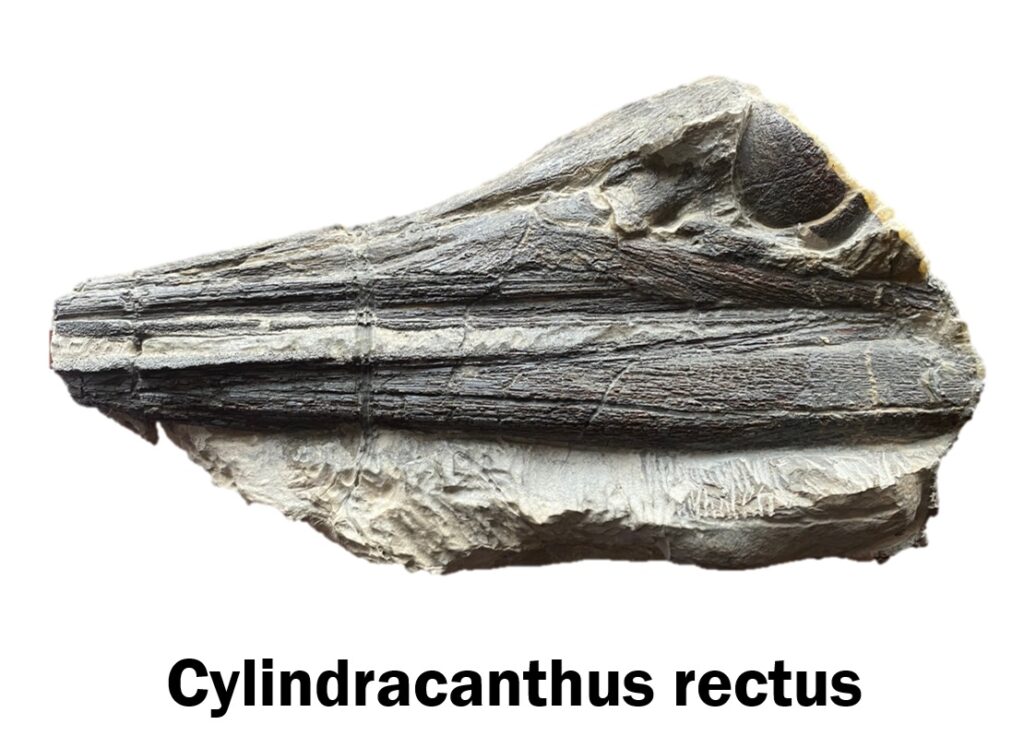
- Cylindracanthus rectus
- Hemirhabdorhynchus elliotti
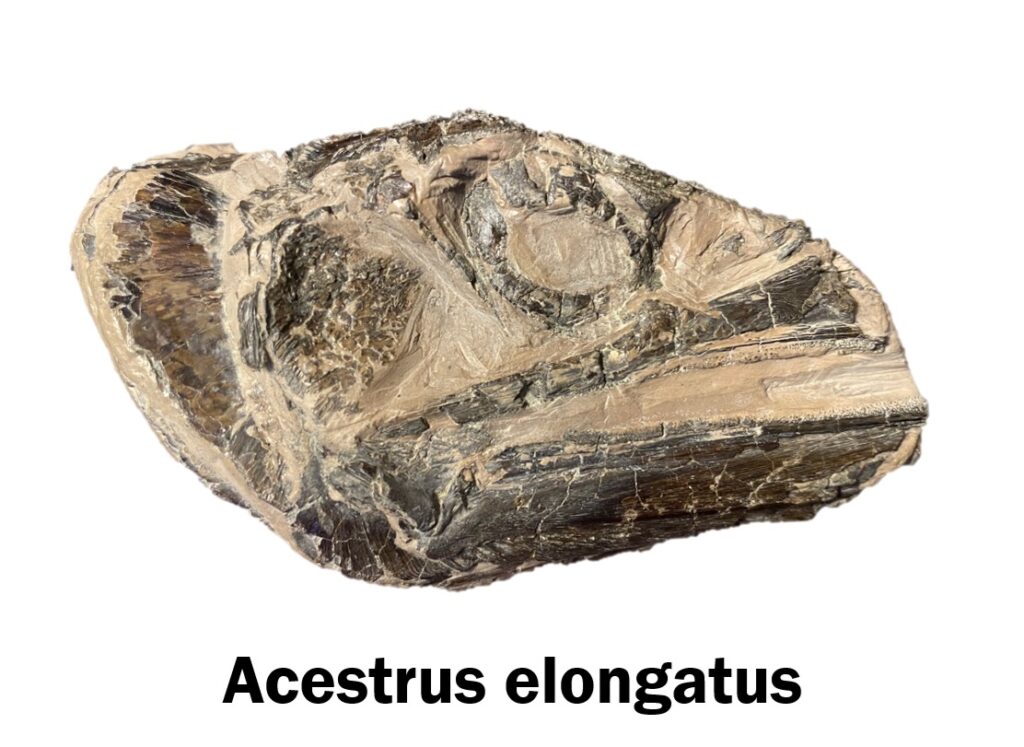
- Acestrus elongatus
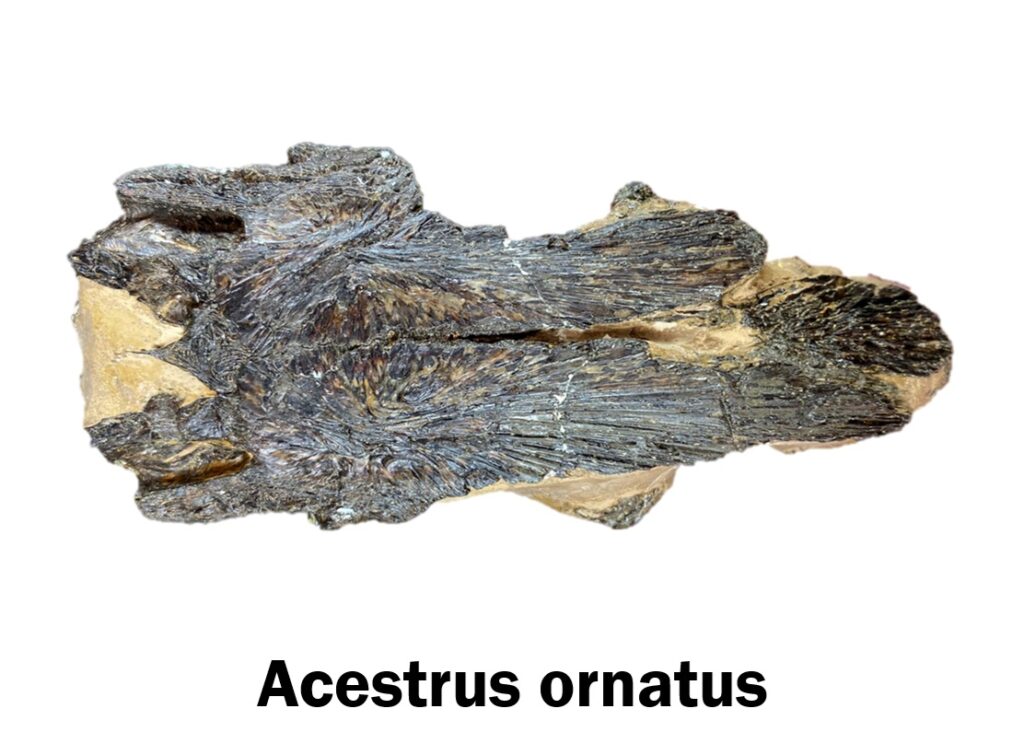
- Acestrus ornatus
- Aglyptorhynchus venablesi
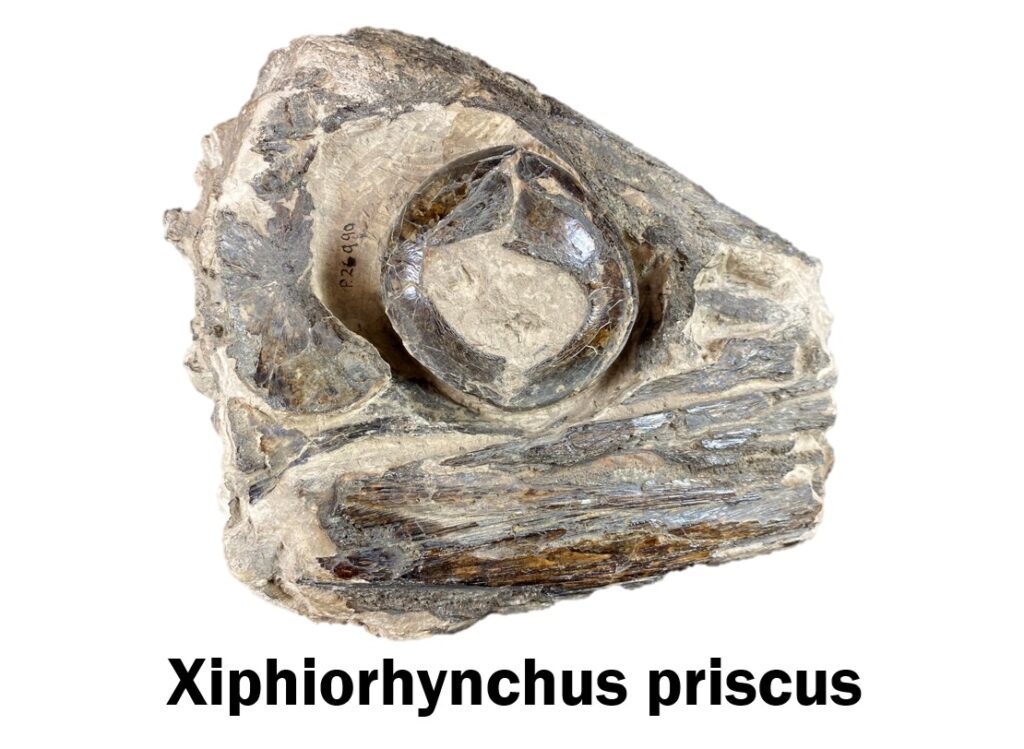
- Xiphiorhynchus priscus
Istiophoriformes (Billfish)
Scientific Classification
Class: Actinopterygii (Ray-finned Fish)
Clade: Percomorpha
Order: Istiophoriformes (Billfish)
Istiophoriformes are a group of ray-finned fish which are more commonly known as Billfish, containing well known modern game fish like Marlin, Swordfish and Sailfish. Evolving in either the Late Cretaceous or Early Palaeocene, this group of fish are characterised by their elongated rostrums.
There are a number of extinct ‘Billfish’ that have been recorded within the London Clay, including Xiphiorhynchus, Enniskillenus and Cylindracanthus, however there is a high degree of historic confusion that requires further research to gain a clearer picture. The main driver in this confusion is the lack of complete specimens. Some of the described species have been named purely from fossil rostrums (elongated upper or lower jaw sections) while others have been described from just neocraniam skull material. It is more than likely some of these species are in fact duplicated and belong to the same species of extinct fish.
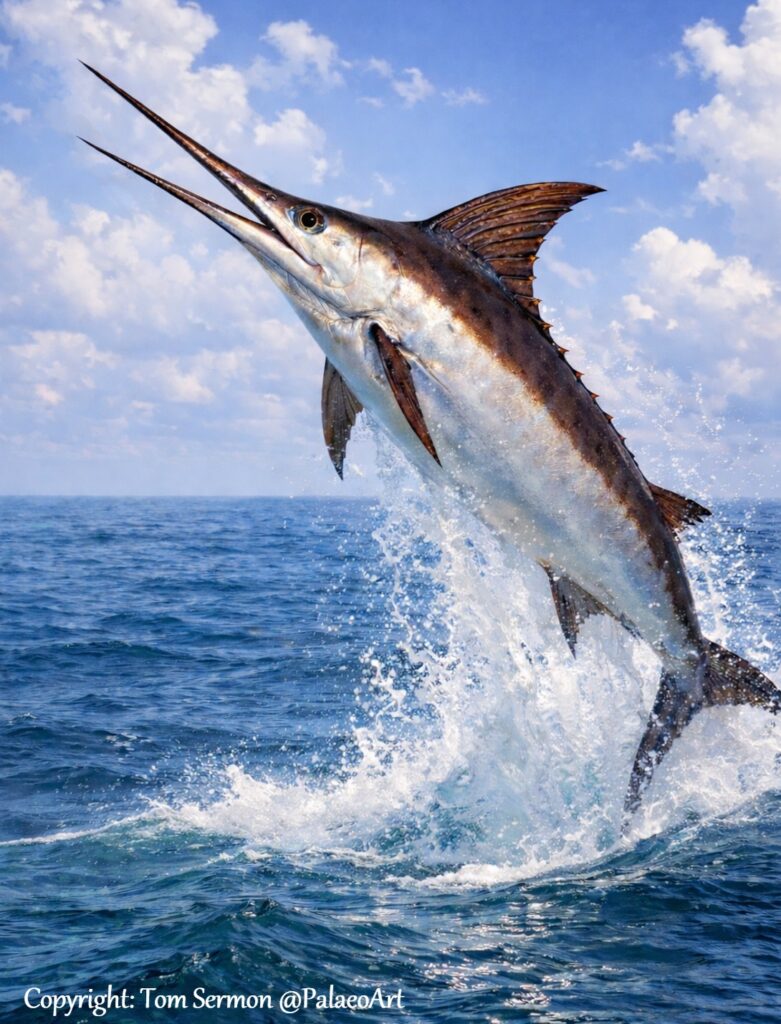
This reconstruction shows a breaching Xiphiorhynchus priscus which is characterised by elongation to both the upper and lower jaws.